February 3rd, 2026
New Whisperit AI Assistant v3
Over the past two months, we completely re-engineered the AI Assistant from the ground up.
The result is an assistant that is smarter, significantly more reliable, and capable of handling complex legal tasks that previously caused friction.
Here is what has changed and why it matters for your legal work.
Simpler, More Reliable Architecture
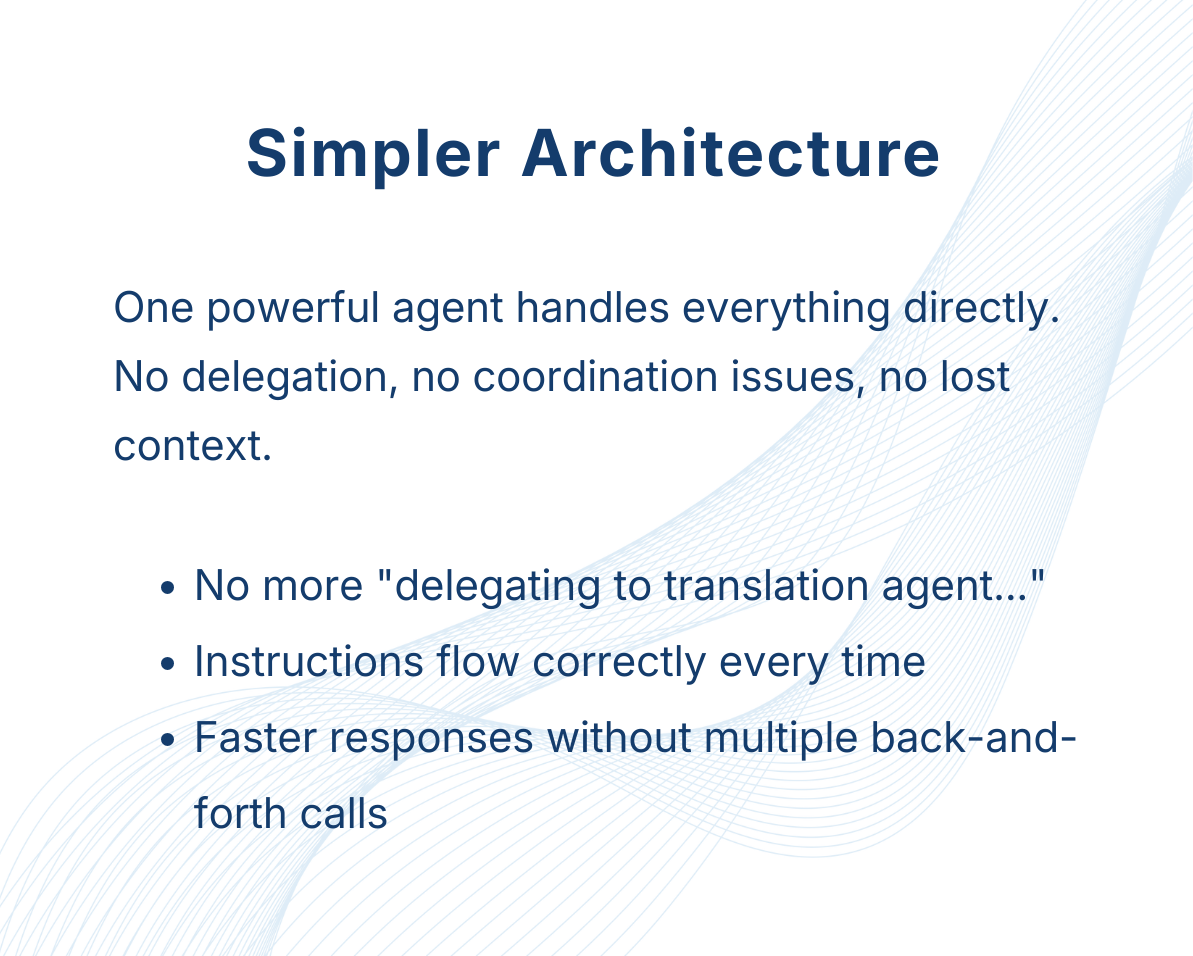
Before: The assistant used multiple specialized AI agents that talked to each other. The main agent would delegate tasks to specialist agents (translator, summarizer, etc.), which created coordination problems:
Users would be told "I've delegated this to the translation agent, please wait..." when nothing was actually happening
Critical instructions would get lost between agents, leading to incorrect answers
Wrong routing: asking for a translation of a long document might accidentally trigger the summariser instead
Extra latency from multiple back-and-forth calls
Now: One powerful agent handles everything directly. No delegation, no coordination issues, no lost context.
Smarter AI Model
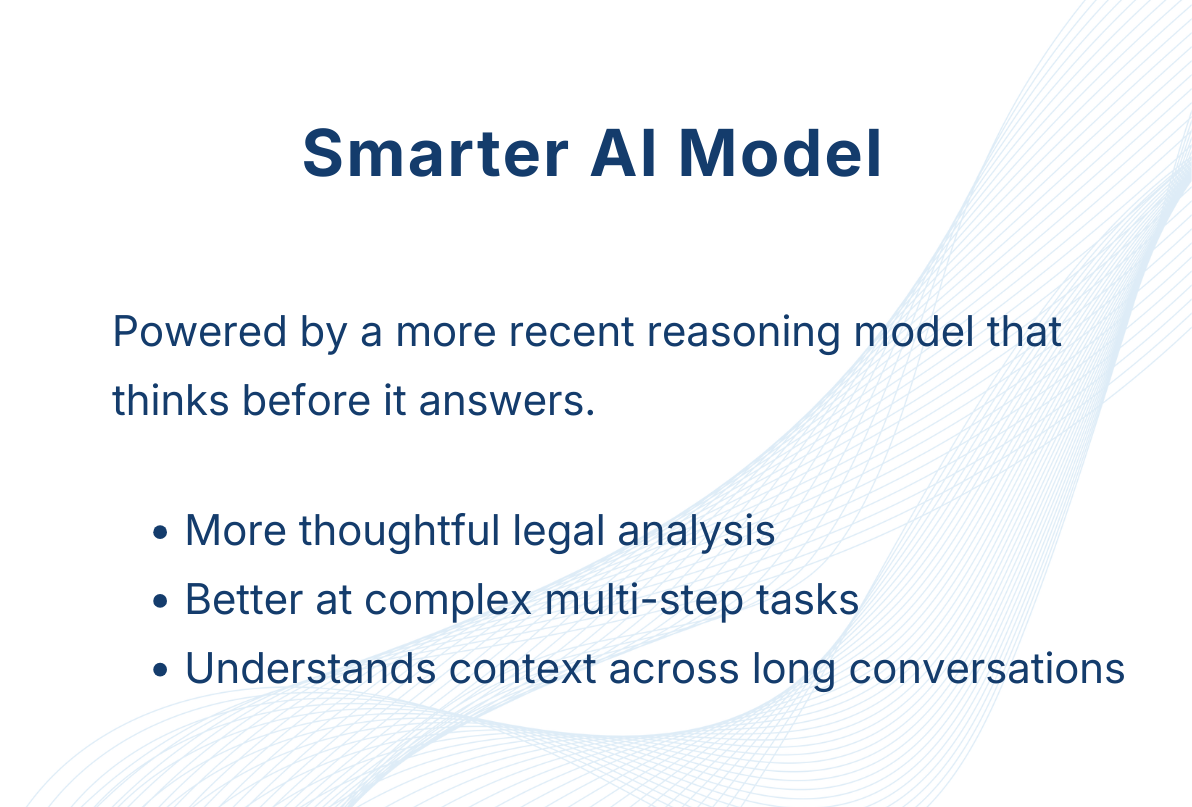
The assistant now thinks before it answers.
The new agent now uses a more recent, reasoning model. What this means:
More thoughtful, nuanced legal analysis
Better at complex multi-step tasks
More up-to-date knowledge
Understands context better across long conversations
Accurate Long Document Translation
Before: The old assistant would translate the first few pages perfectly, then start summarising or truncating the rest. Users couldn't trust translations of 10+ page contracts.
The new agent:
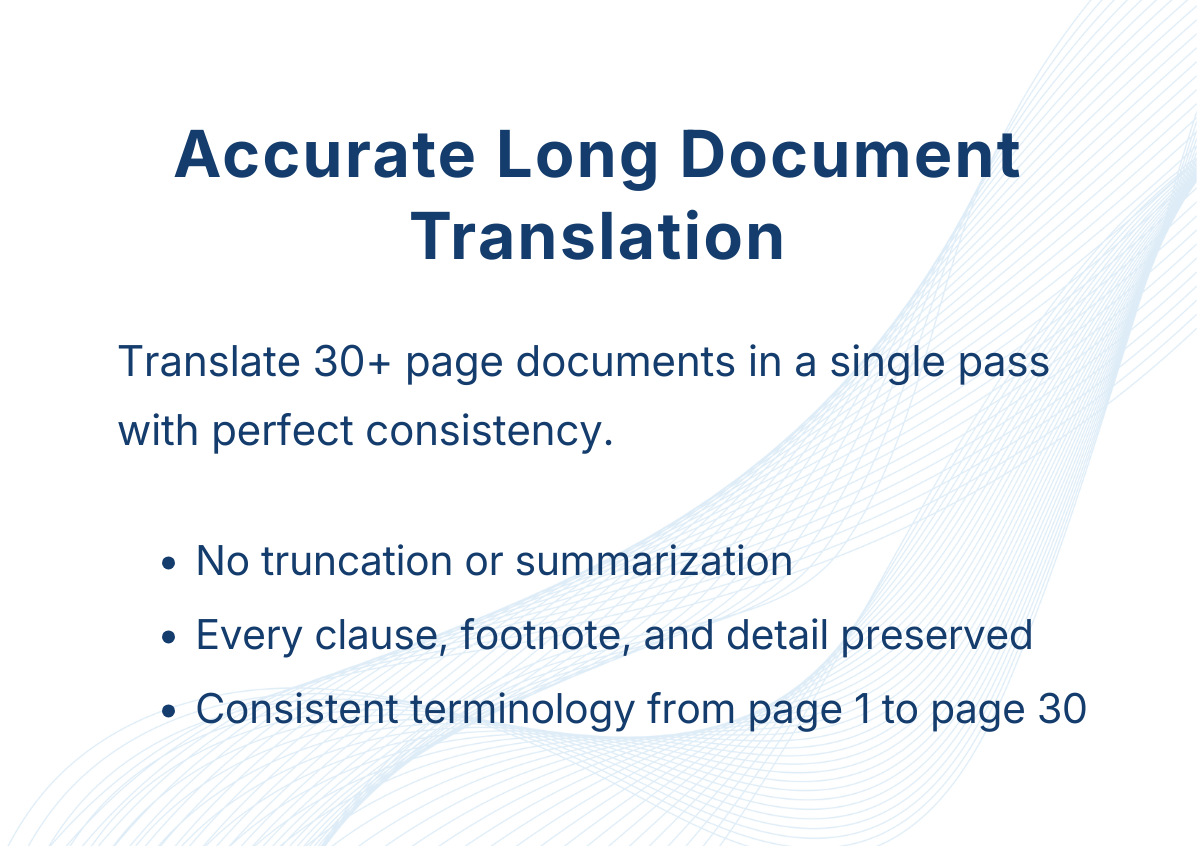
Can now translate 30+ page documents in a single pass
Maintains consistency from page 1 to page 30 (definitions, terminology, formatting)
No silent omissions or "lazy" outputs
Example: A 30-page employment contract in French translated into German in Whisperit now preserves every clause, every footnote, every detail.
Vision Capabilities
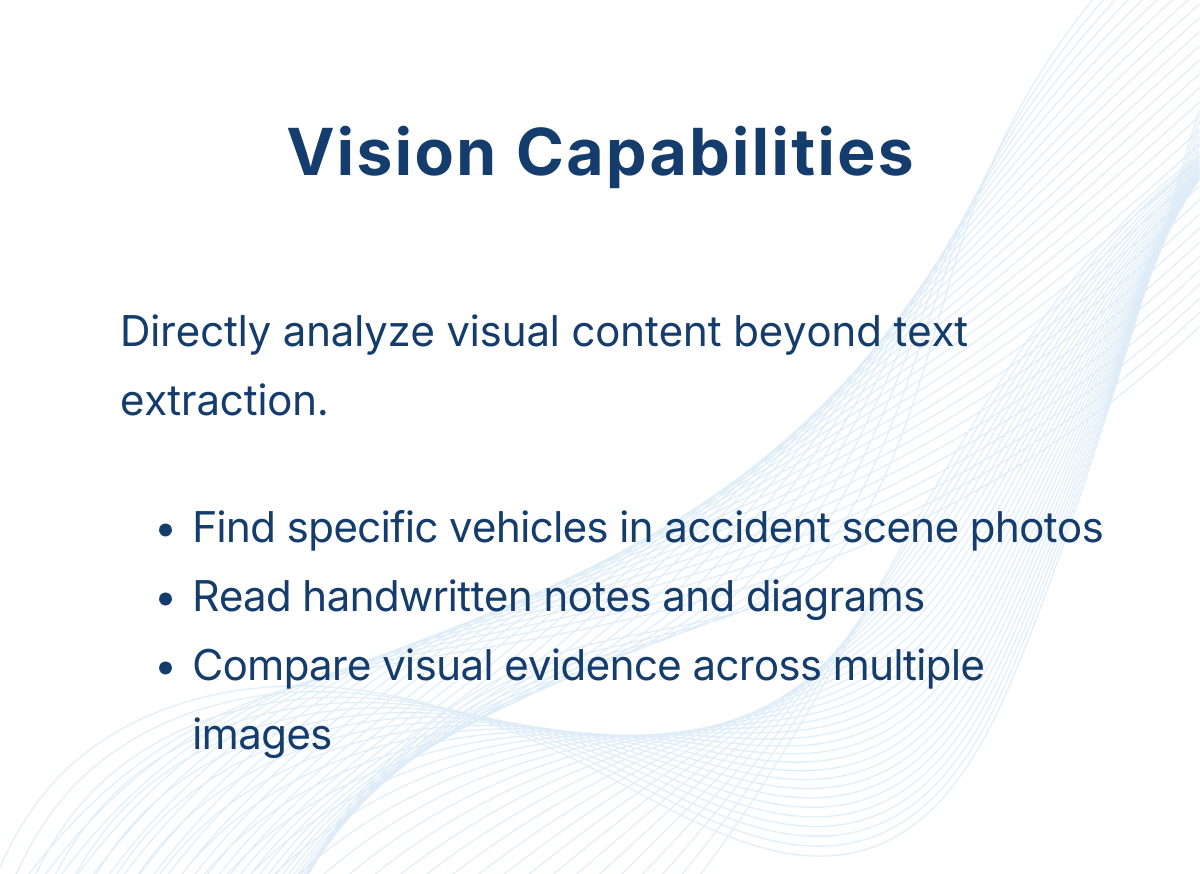
Before: The assistant could only work with images containing easily extractable text (scanned documents, screenshots with text)
Now: It can directly analyse any visual content.
Use Cases:
"Among all images in this case, find the damaged grey SUV and tell me the license plate"
Analysing diagrams, charts, photos of accident scenes
Understanding handwritten notes (even messy ones)
Comparing visual evidence across multiple images
Note: support for .webp images is coming soon
Summarize the Whole Case, Not Just Part of It
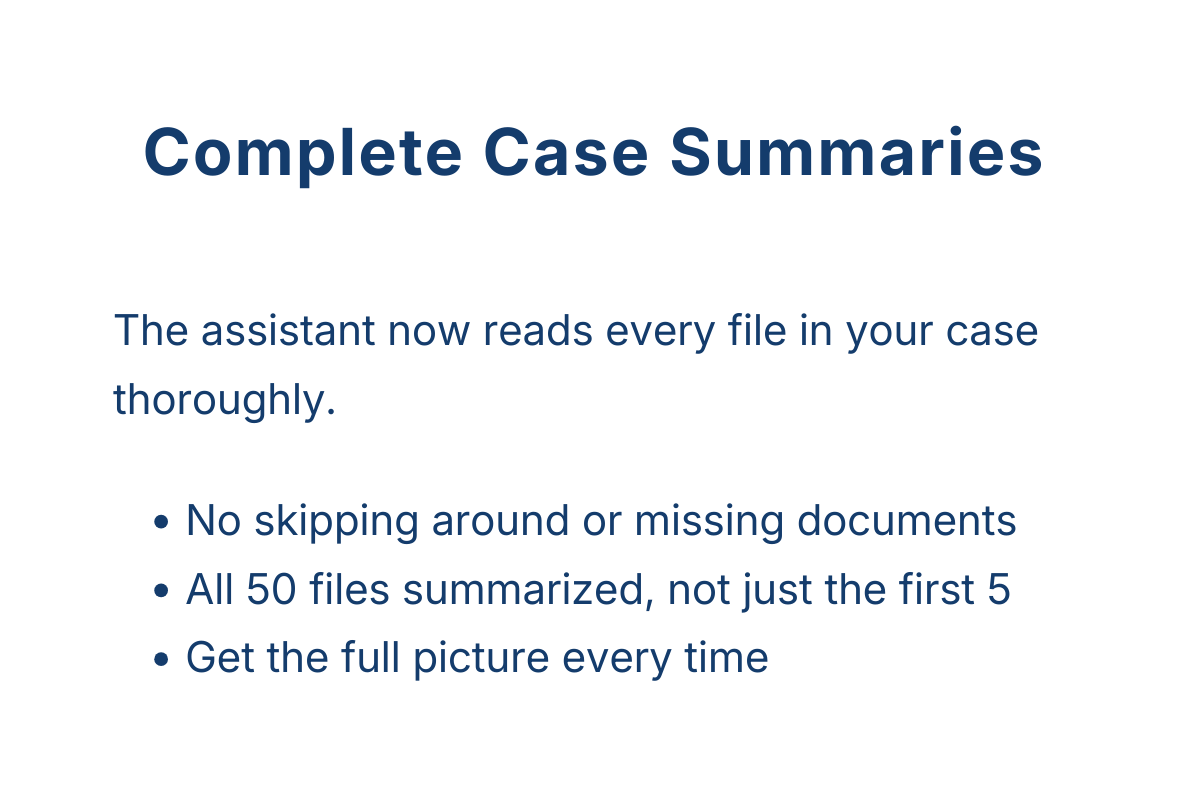
In large cases, you need the full picture.
Previously, asking to "summarise this case" would return something that looked comprehensive but was actually based on only a fraction of your files. The assistant could only hold so much information at once, so it would skip around, miss documents, or focus heavily on just the first few files.
Now: The assistant reads every file in your case thoroughly. When you ask for a summary, you get one that actually covers everything—all 50 files, not just the first 5.
Better File Attachment Handling
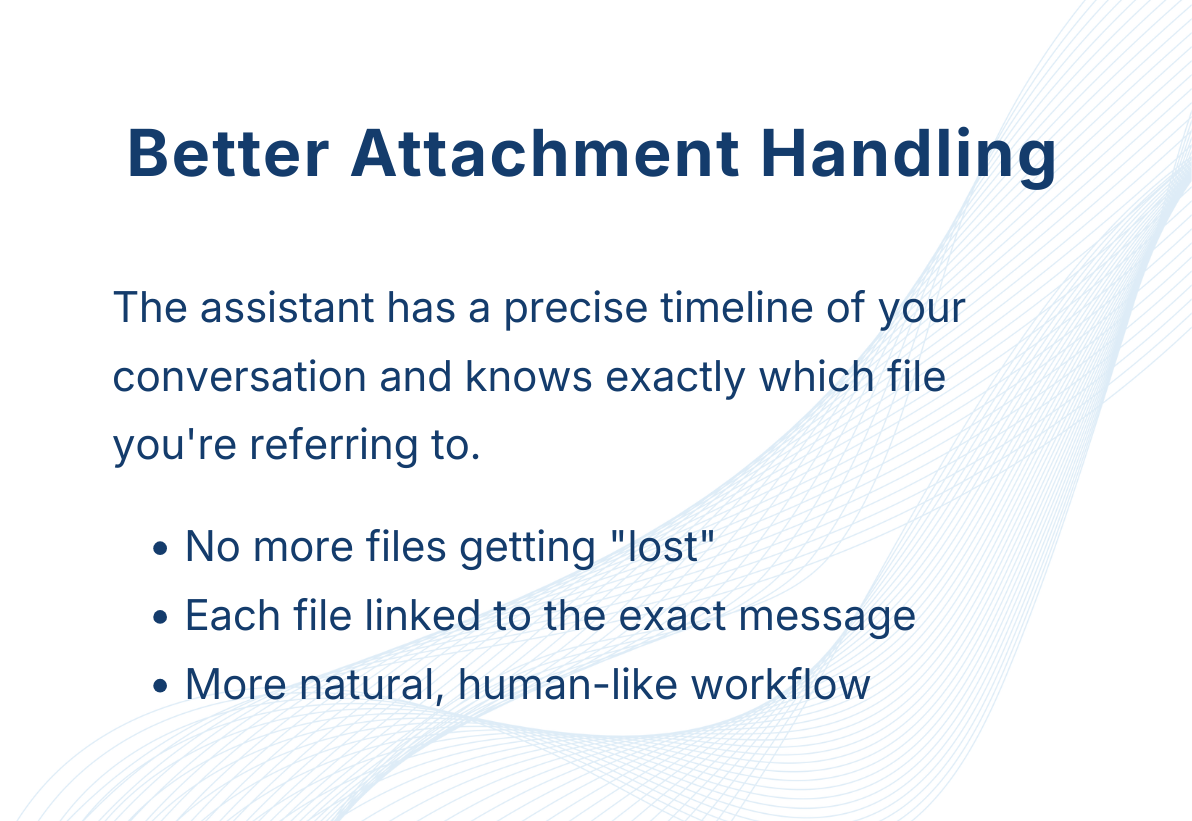
Before: Previously, files could get "lost" in the flow of a long conversation. The AI sometimes struggled to differentiate between a document you just uploaded and one you sent 20 messages ago.
Now: The assistant now has a precise timeline of your conversation. It understands exactly which file you are referring to based on when you sent it, allowing for a much more natural, human-like workflow. Each file is linked to the exact message where it was uploaded.
Quality Assurance: Built for Reliability
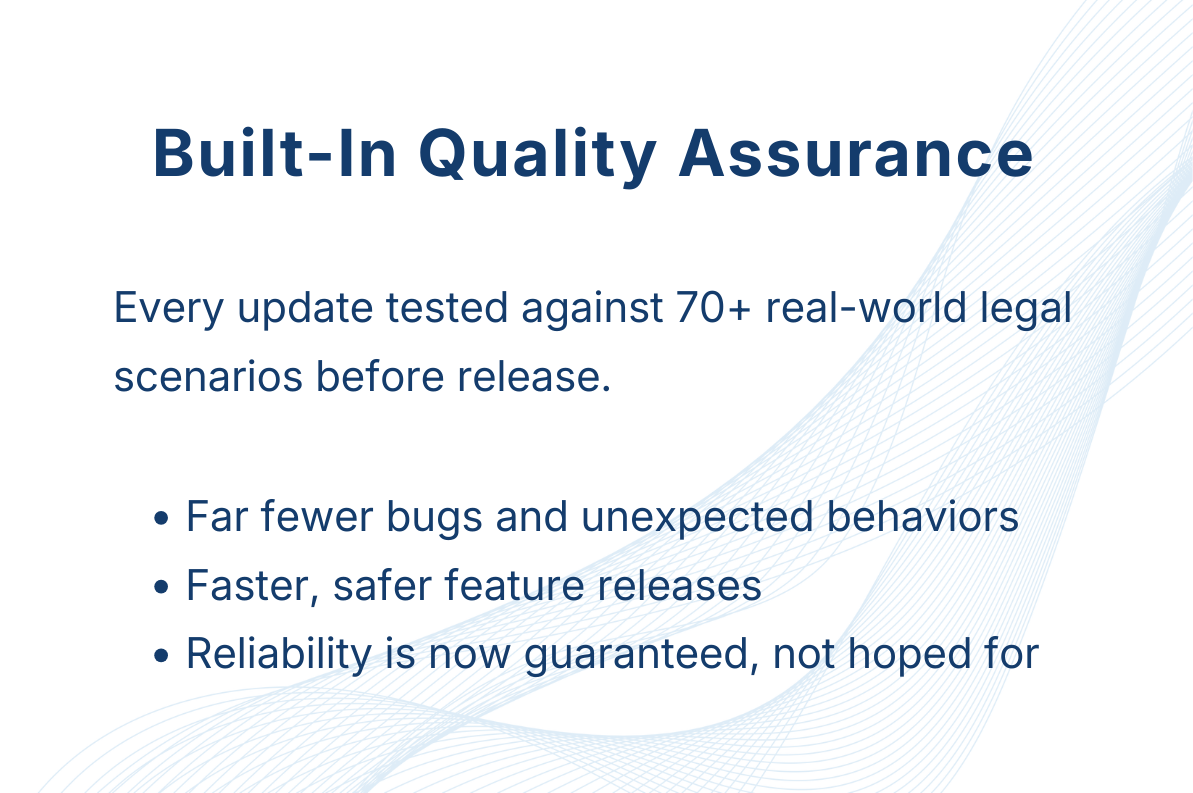
The most important change is the one you don’t see—but you’ll feel it every day.
We rebuilt the assistant’s entire infrastructure with reliability as the top priority.
Previously, improving the assistant often led to a classic whack-a-mole effect: fixing one issue would unexpectedly break something else. A change that improved translations might degrade summaries. A performance optimisation could introduce edge-case failures. Each improvement carried hidden risk.
To eliminate this, we rebuilt the assistant’s entire infrastructure with systematic reliability as a first-class goal.
Automated Quality Control
Before any update is released, Whisperit now automatically runs 70+ real-world legal scenarios, including:
Complex drafting tasks
Long-document translations
Multi-file case analysis
Image analysis
Edge-case user instructions
Each scenario verifies that the assistant still behaves correctly. If a change breaks even one of them, it doesn’t ship.
What this gives you
Far fewer bugs and unexpected behaviors
Faster, safer feature releases